


Made for curious minds
Primary school topics, one page at a time.
Printable learning resources for home and the classroom. Start with the fact sheets: one illustrated page per topic, across eight subject groups.

230 illustrated topics
Eight subject groups, from the living world to technologies and the arts.
A4 & US Letter
Every topic fits on one page and prints on either paper size.
Labelled drawings
A drawing with its parts named, so a big idea can be taken in at a glance.
One-page PDF
Read it on screen, or download the page to print — no account needed.
What would you like to learn?
Fact sheets
One illustrated page per topic: a labelled drawing, the key facts and the words to know.
230 fact sheets

Living world
Plants, animals, life cycles, habitats and ecosystems.
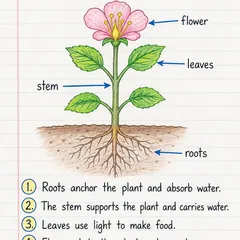
Parts of a flowering plant
Roots, stem, leaves and flower, and the job each one does.
F – 2View & print →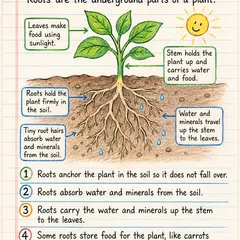
What roots do
How roots anchor a plant and draw up water from the soil.
F – 2View & print →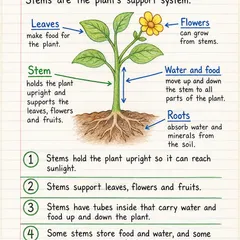
What stems do
How stems hold a plant up and carry water to its leaves.
F – 2View & print →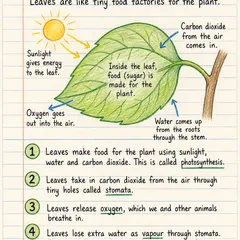
What leaves do
How leaves catch sunlight and make food for the plant.
F – 2View & print →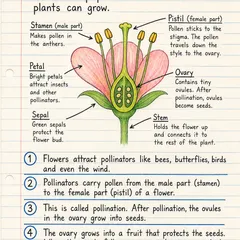
What flowers do
How flowers make seeds so a new plant can grow.
F – 2View & print →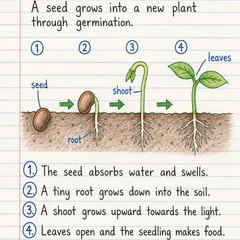
How a seed becomes a plant
From seed to shoot to seedling, one step at a time.
F – 2View & print →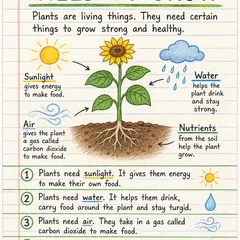
What plants need to grow
Light, water, air, warmth and nutrients — and what each is for.
F – 2View & print →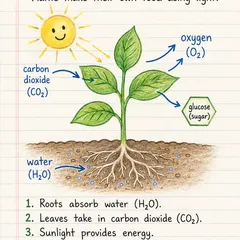
Photosynthesis
How plants use sunlight, water and carbon dioxide to make food.
Years 3 – 4View & print →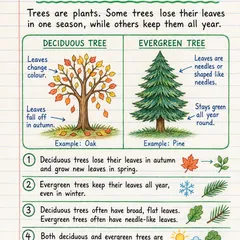
Deciduous and evergreen trees
Trees that drop their leaves, and trees that keep them.
F – 2View & print →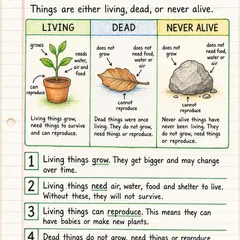
Living, dead and never alive
Sorting things into living, once living and never alive.
F – 2View & print →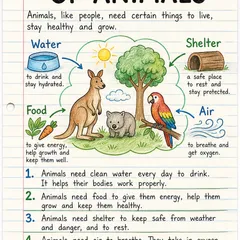
Basic needs of animals
Food, water, shelter and air, and why every animal needs them.
F – 2View & print →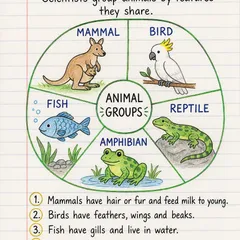
Animal groups: mammals, birds, fish, reptiles and amphibians
The five big groups, and the features that tell them apart.
F – 2View & print →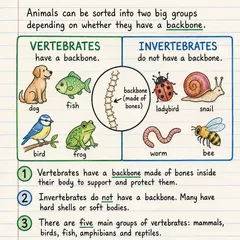
Vertebrates and invertebrates
Animals with a backbone, and animals without one.
Years 3 – 4View & print →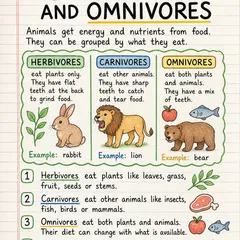
Herbivores, carnivores and omnivores
Sorting animals by what they eat.
F – 2View & print →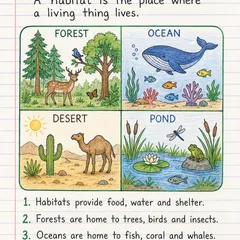
Habitats and what they provide
What a habitat gives an animal, and why it lives there.
F – 2View & print →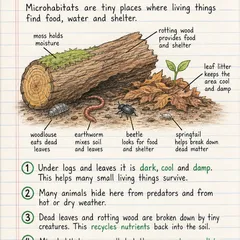
Microhabitats under logs and leaves
The small damp worlds under a log, and who lives in them.
F – 2View & print →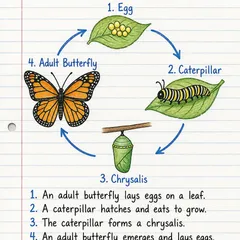
The life cycle of a butterfly
Egg, caterpillar, chrysalis and butterfly, round again.
F – 2View & print →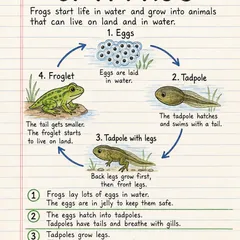
The life cycle of a frog
From spawn to tadpole to frog, and what changes at each stage.
F – 2View & print →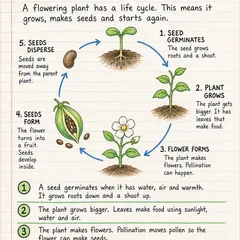
The life cycle of a flowering plant
Seed, seedling, flower and seed again.
Years 3 – 4View & print →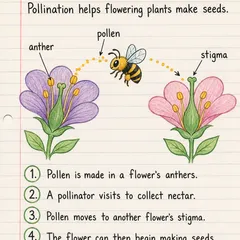
Pollination
How pollen travels between flowers, and who carries it.
Years 3 – 4View & print →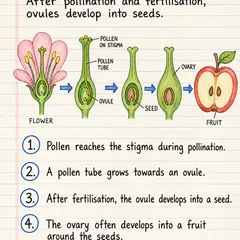
Seed formation
What happens inside a flower after pollination.
Years 3 – 4View & print →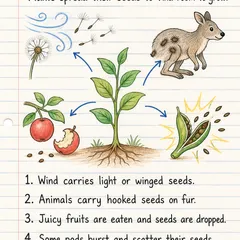
Seed dispersal
Wind, water, animals and bursting pods — how seeds travel.
Years 3 – 4View & print →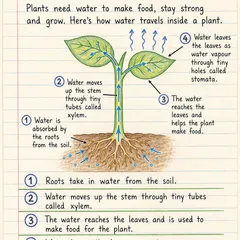
How water travels through a plant
The path water takes from root hair to leaf.
Years 3 – 4View & print →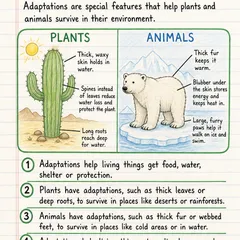
Plant and animal adaptations
Features that suit a living thing to where it lives.
Years 3 – 4View & print →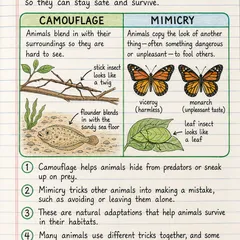
Camouflage and mimicry
Hiding in plain sight, and pretending to be something else.
Years 3 – 4View & print →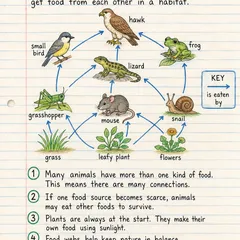
Food webs
How many food chains link together in one habitat.
Years 5 – 6View & print →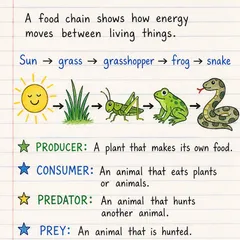
A simple food chain
How energy moves from the Sun to plants and animals.
F – 2View & print →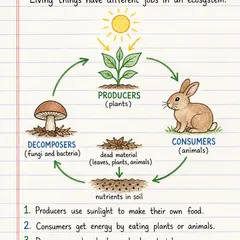
Producers, consumers and decomposers
Who makes food, who eats it and who breaks it down.
Years 3 – 4View & print →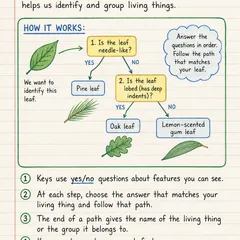
Classification keys
Yes-or-no questions that name an unknown living thing.
Years 5 – 6View & print →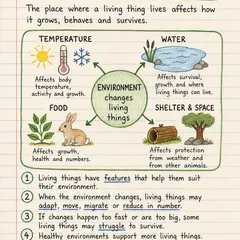
How environments change living things
What happens to plants and animals when their home changes.
Years 5 – 6View & print →


Body & wellbeing
Body systems, healthy habits, safety and emotional wellbeing.
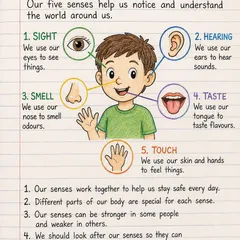
The five senses
Sight, hearing, smell, taste and touch, and the body part for each.
F – 2View & print →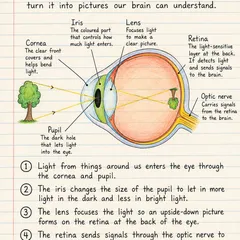
How the eye helps us see
The path light takes through the eye to make a picture.
Years 3 – 4View & print →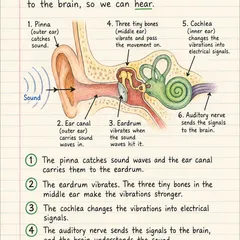
How the ear helps us hear
How sound travels through the ear and becomes hearing.
Years 3 – 4View & print →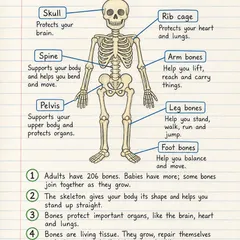
The skeleton
The bones that hold us up, and what they protect.
Years 3 – 4View & print →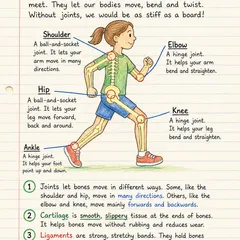
Joints and movement
Hinges, ball-and-sockets, and how bones move against each other.
Years 3 – 4View & print →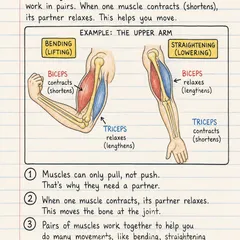
Muscles work in pairs
Why one muscle pulls while the other relaxes.
Years 5 – 6View & print →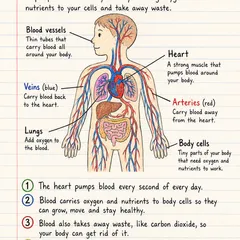
The circulatory system
How blood travels round the body, and what it carries.
Years 5 – 6View & print →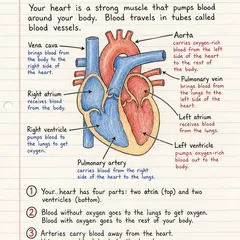
The heart and blood vessels
The heart as a pump, and the vessels it pumps through.
Years 5 – 6View & print →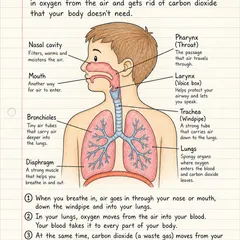
The respiratory system
The route air takes from nose to lungs.
Years 5 – 6View & print →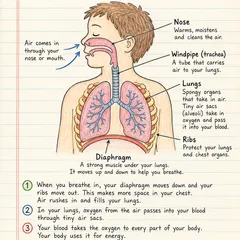
How breathing works
What the ribs and diaphragm do with every breath.
Years 5 – 6View & print →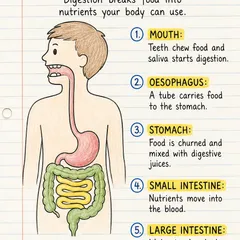
The digestive system
Follow food through the body as it is broken into nutrients.
Years 3 – 4View & print →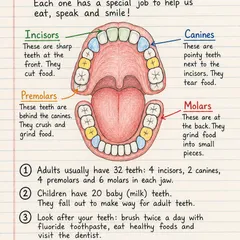
Teeth and their jobs
Incisors, canines and molars, and what each one is shaped for.
Years 3 – 4View & print →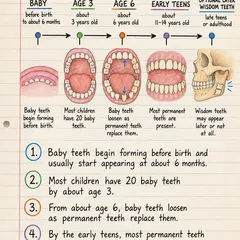
The life cycle of human teeth
Baby teeth, losing them, and the adult teeth that follow.
Years 3 – 4View & print →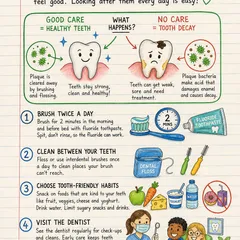
How to care for teeth
Brushing, flossing and the habits that keep teeth healthy.
F – 2View & print →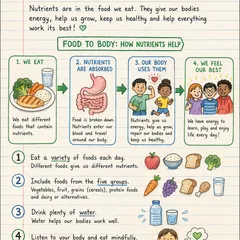
Nutrients and a balanced diet
What the body gets from each kind of food.
Years 3 – 4View & print →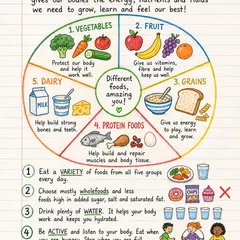
The five food groups
The five groups, with everyday examples of each.
F – 2View & print →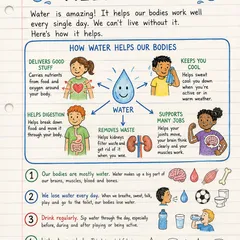
Why our bodies need water
What water does inside the body, and how much we lose.
F – 2View & print →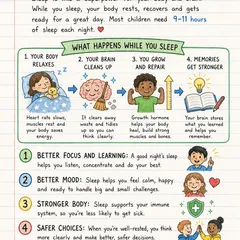
Why sleep matters
What the body and brain get done while we sleep.
F – 2View & print →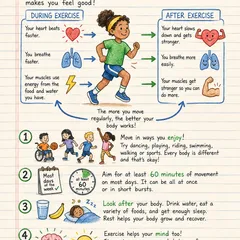
Exercise and the body
What moving about does for muscles, heart and mood.
Years 3 – 4View & print →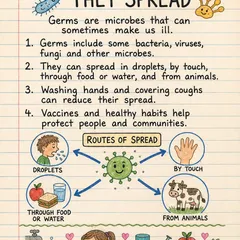
Germs and how they spread
How germs pass from person to person, and how to stop them.
F – 2View & print →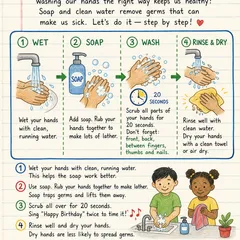
Handwashing step by step
The steps that actually get hands clean, in order.
F – 2View & print →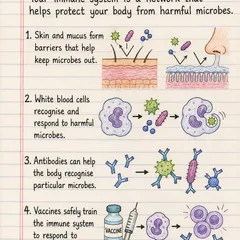
The immune system: a simple introduction
How the body defends itself against germs.
Years 5 – 6View & print →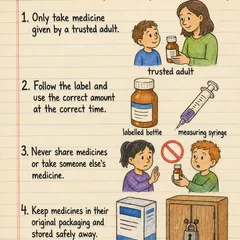
Medicines and safe use
Who gives medicine, why the dose matters and when to ask.
Years 3 – 4View & print →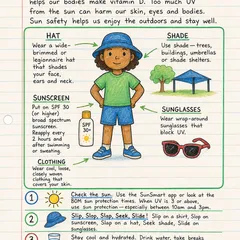
Sun safety
Shade, hats, sunscreen and the times of day to take care.
F – 2View & print →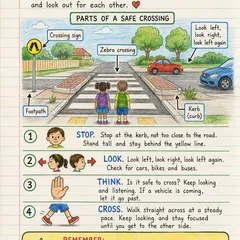
Road safety for pedestrians
Stop, look, listen and think, and where it is safe to cross.
F – 2View & print →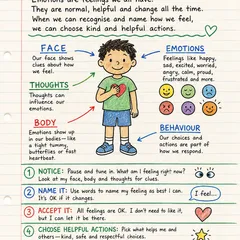
Recognising and naming emotions
Putting a name to how a feeling looks and feels.
F – 2View & print →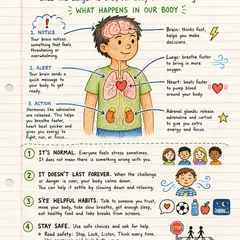
The body’s stress response
What the body does when it senses something worrying.
Years 5 – 6View & print →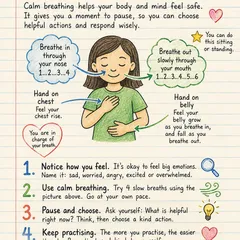
Calm breathing and self-regulation
Simple breathing that settles the body down again.
F – 2View & print →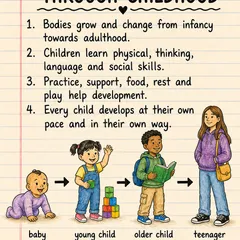
Growth and change through childhood
How bodies and skills change from baby to teenager.
Years 3 – 4View & print →


Earth & environment
Land, water, weather, climate and caring for our environment.
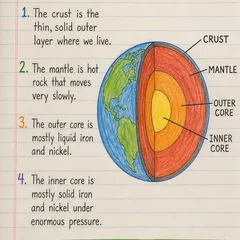
Layers of the Earth
Crust, mantle, outer core and inner core, from the surface down.
Years 5 – 6View & print →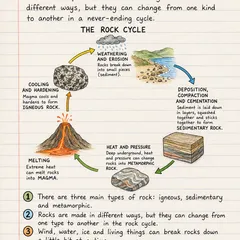
Rocks and how they form
Igneous, sedimentary and metamorphic, and where each comes from.
Years 3 – 4View & print →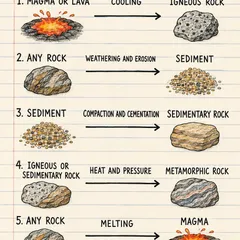
The rock cycle
How one kind of rock becomes another, over and over.
Years 5 – 6View & print →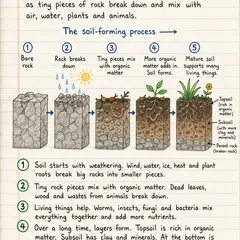
How soil forms
How rock, water, air and living things make soil.
Years 3 – 4View & print →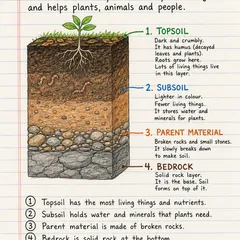
Layers of soil
What you would see in a slice of ground, top to bottom.
Years 3 – 4View & print →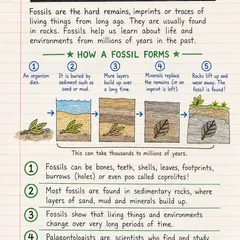
Fossils and how they form
How a living thing leaves a record in rock.
Years 3 – 4View & print →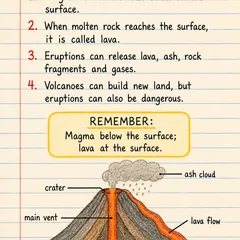
Volcanoes
What is happening inside a volcano when it erupts.
Years 3 – 4View & print →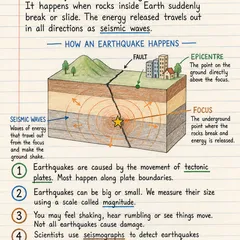
Earthquakes
Why the ground shakes, and what moves beneath it.
Years 5 – 6View & print →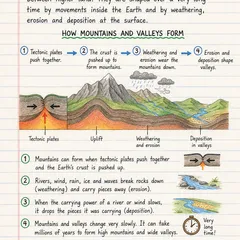
Mountains and valleys
How land is pushed up and worn down into shapes.
Years 3 – 4View & print →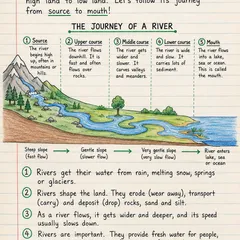
Rivers from source to mouth
A river from its source in the hills to the sea.
Years 3 – 4View & print →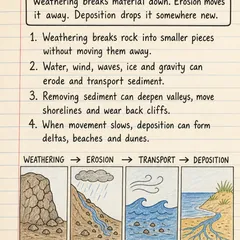
How erosion changes land
How water, wind and ice carry land away.
Years 5 – 6View & print →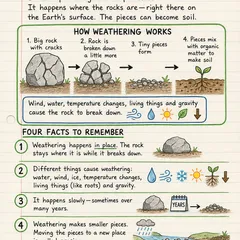
Weathering: breaking rocks down
How rock is broken up without being carried off.
Years 5 – 6View & print →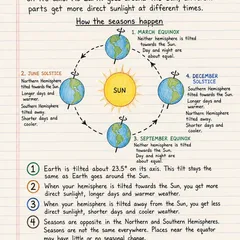
The four seasons
What changes through the year, and why.
F – 2View & print →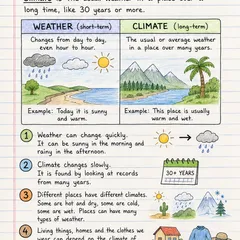
Weather and climate
The difference between today outside and a place year on year.
Years 3 – 4View & print →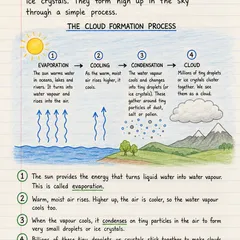
How clouds form
How rising air turns invisible water into cloud.
Years 3 – 4View & print →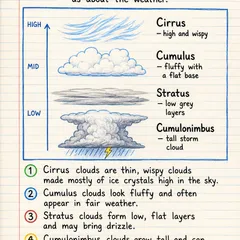
Types of clouds
Naming clouds by their shape and how high they sit.
Years 3 – 4View & print →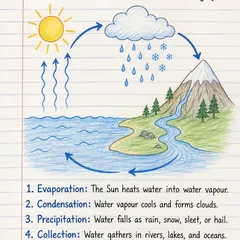
The water cycle
How water evaporates, forms clouds, falls and collects again.
Years 3 – 4View & print →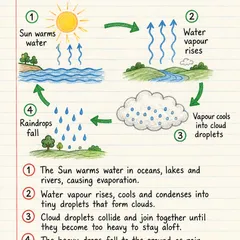
How rain forms
How tiny droplets join up until they are heavy enough to fall.
F – 2View & print →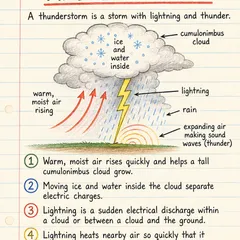
Thunderstorms and lightning
What builds up inside a storm cloud, and why thunder follows.
Years 3 – 4View & print →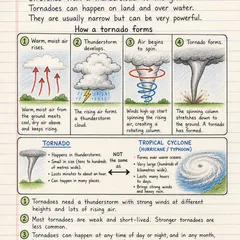
Tornadoes
How a spinning column of air forms, and what it does.
Years 3 – 4View & print →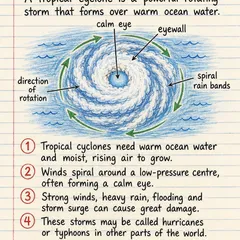
Tropical cyclones
How a storm grows over warm ocean, and the parts it has.
Years 5 – 6View & print →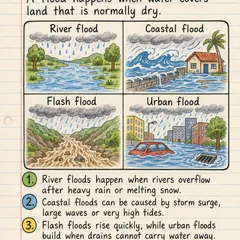
Floods
What makes water rise, and what it does when it does.
Years 3 – 4View & print →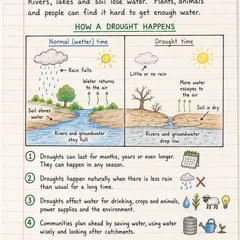
Droughts
What happens to land, plants and people when rain does not come.
Years 3 – 4View & print →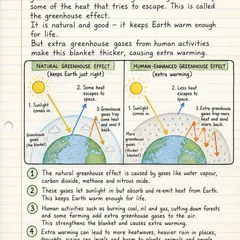
The greenhouse effect
How gases in the air keep the Earth warm.
Years 5 – 6View & print →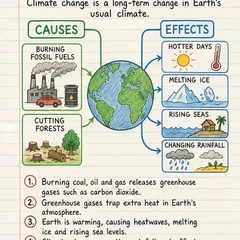
Climate change: causes and effects
What is warming the Earth, and what follows from it.
Years 5 – 6View & print →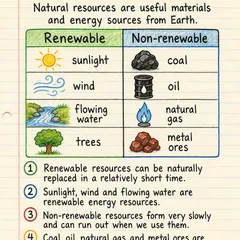
Renewable and non-renewable resources
Resources that come back, and resources that run out.
Years 5 – 6View & print →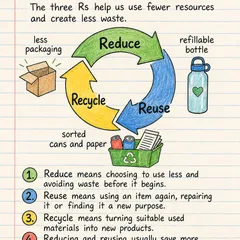
Reduce, reuse and recycle
Three ways to make less waste, in the order that helps most.
F – 2View & print →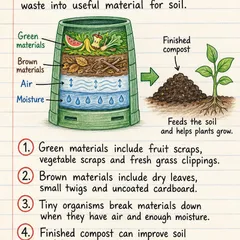
Composting
How scraps and clippings turn back into soil.
Years 3 – 4View & print →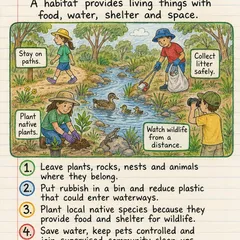
How to protect a local habitat
Practical things that help a nearby habitat thrive.
F – 2View & print →


Science & space
Forces, light, sound, matter, electricity and our solar system.
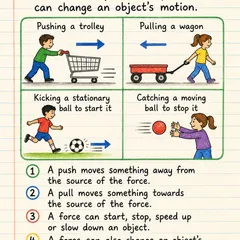
Pushes and pulls
The two kinds of force, and what they do to objects.
F – 2View & print →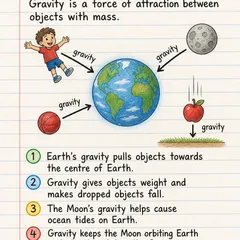
Gravity
The pull that brings everything back down.
Years 3 – 4View & print →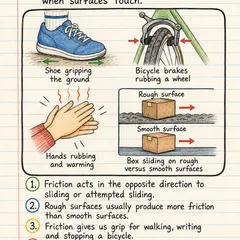
Friction
The force that slows things sliding past each other.
Years 3 – 4View & print →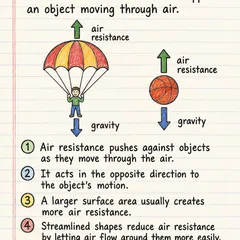
Air resistance
How air pushes back on things moving through it.
Years 5 – 6View & print →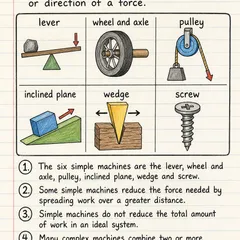
Simple machines
Six machines that make a job easier.
Years 3 – 4View & print →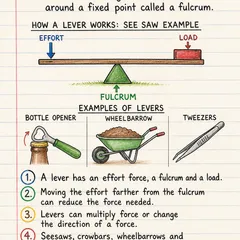
Levers
Load, effort and fulcrum, and why a lever helps.
Years 3 – 4View & print →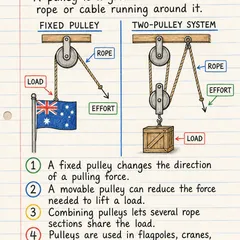
Pulleys
How a wheel and rope change the direction of a pull.
Years 3 – 4View & print →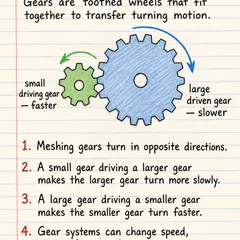
Gears
How toothed wheels pass on turning, and change its speed.
Years 5 – 6View & print →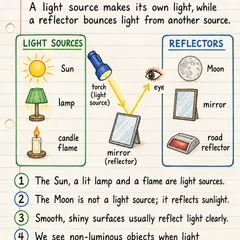
Light sources and reflectors
Things that make their own light, and things that bounce it.
F – 2View & print →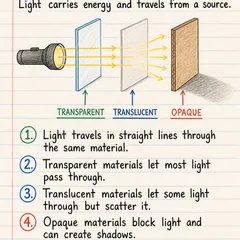
How light travels
Why light goes in straight lines, and what that means.
Years 3 – 4View & print →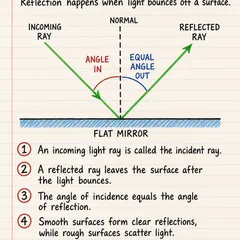
Reflection
How light bounces off a surface, and how mirrors work.
Years 3 – 4View & print →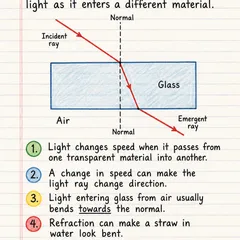
Refraction
Why light bends when it passes into water or glass.
Years 5 – 6View & print →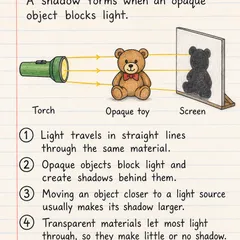
How shadows form
What makes a shadow, and what changes its size.
F – 2View & print →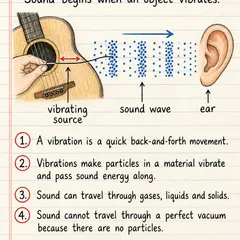
Sound and vibration
How something shaking makes a sound you can hear.
Years 3 – 4View & print →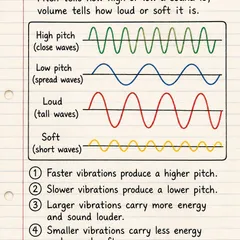
Pitch and volume
What makes a sound high or low, loud or soft.
Years 3 – 4View & print →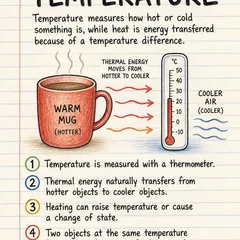
Heat and temperature
How heat moves, and what a thermometer measures.
Years 3 – 4View & print →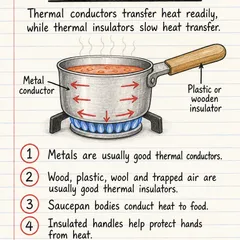
Conductors and insulators
Materials that let heat or electricity through, and those that do not.
Years 5 – 6View & print →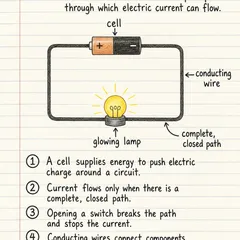
Electrical circuits
What a circuit needs before electricity will flow.
Years 5 – 6View & print →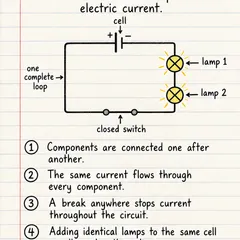
Series circuits
One path for the current, and what happens when it breaks.
Years 5 – 6View & print →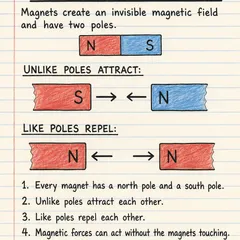
Magnets and magnetic poles
North and south poles, and when they attract or repel.
Years 3 – 4View & print →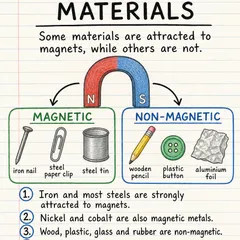
Magnetic and non-magnetic materials
Testing which materials a magnet pulls on.
Years 3 – 4View & print →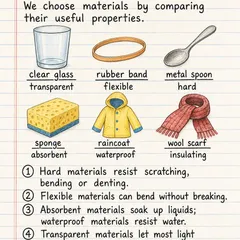
Properties of everyday materials
Describing materials by what they are like and what they suit.
F – 2View & print →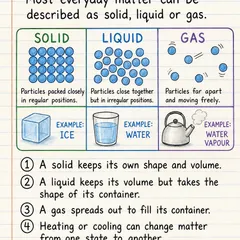
States of matter
The properties of solids, liquids and gases and how they change.
Years 3 – 4View & print →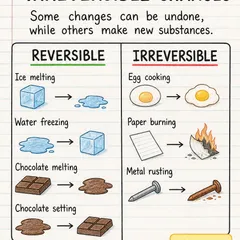
Reversible and irreversible changes
Changes you can undo, and changes you cannot.
Years 5 – 6View & print →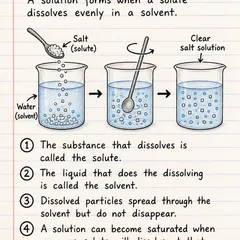
Dissolving and solutions
What happens when a solid disappears into a liquid.
Years 5 – 6View & print →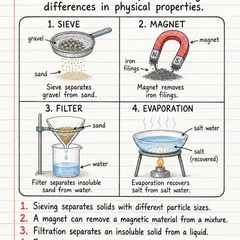
Separating mixtures
Sieving, filtering and evaporating to get the parts back.
Years 5 – 6View & print →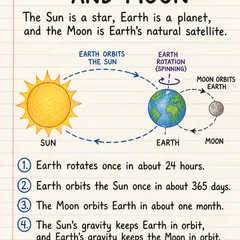
The Sun, Earth and Moon
Three bodies, their sizes and how they move together.
Years 3 – 4View & print →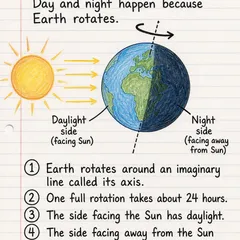
Day and night
How the spinning Earth makes the Sun rise and set.
F – 2View & print →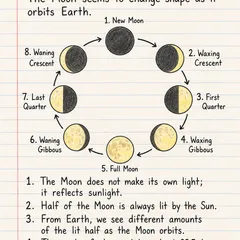
Phases of the Moon
Why the lit part of the Moon changes shape each month.
Years 3 – 4View & print →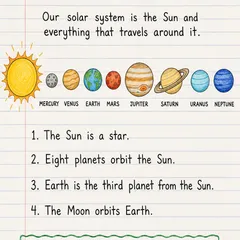
The solar system
Meet the Sun and the eight planets that orbit it.
F – 2View & print →


Mathematics
Numbers, operations, fractions, measurement, shape and data.
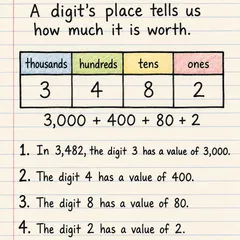
Place value
What each digit is worth, depending on where it sits.
F – 2View & print →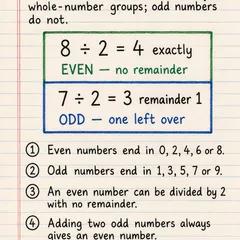
Odd and even numbers
Which numbers pair up, and which have one left over.
F – 2View & print →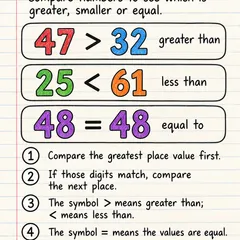
Comparing numbers
Greater than, less than and equal to, with the signs to match.
F – 2View & print →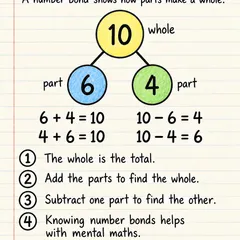
Number bonds
Pairs of numbers that make the same total.
F – 2View & print →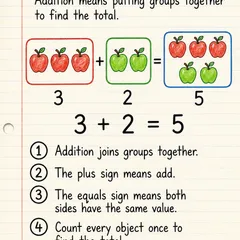
Addition as combining
Putting groups together to find how many altogether.
F – 2View & print →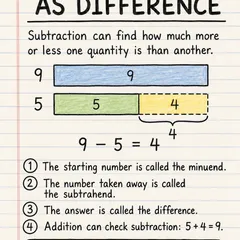
Subtraction as difference
Taking away, and finding the gap between two numbers.
F – 2View & print →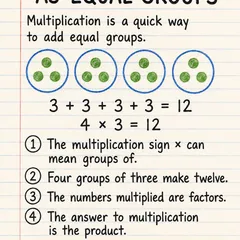
Multiplication as equal groups
Equal groups, arrays and repeated addition.
Years 3 – 4View & print →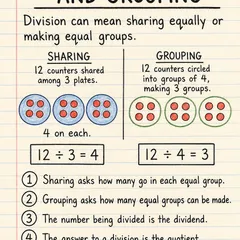
Division as sharing and grouping
Sharing fairly, and finding how many groups fit.
Years 3 – 4View & print →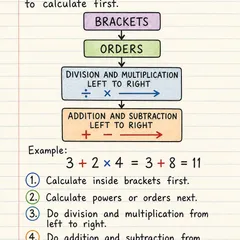
The order of operations
Which part of a calculation to do first, and why.
Years 5 – 6View & print →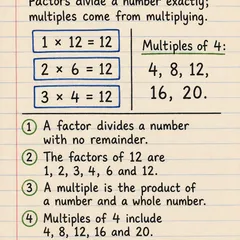
Factors and multiples
Numbers that divide in, and numbers you land on counting up.
Years 5 – 6View & print →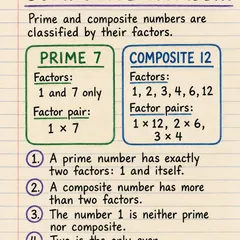
Prime and composite numbers
Numbers with exactly two factors, and numbers with more.
Years 5 – 6View & print →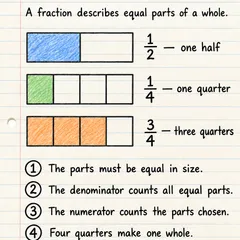
Fractions as equal parts
Splitting a whole into equal parts and naming them.
F – 2View & print →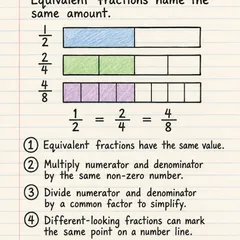
Equivalent fractions
Different fractions that mean the same amount.
Years 3 – 4View & print →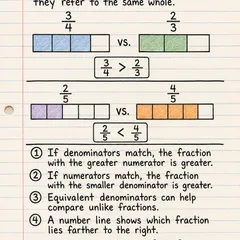
Comparing fractions
Working out which of two fractions is larger.
Years 3 – 4View & print →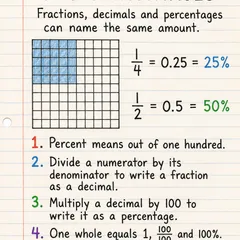
Fractions, decimals and percentages
Three ways of writing the same amount.
Years 5 – 6View & print →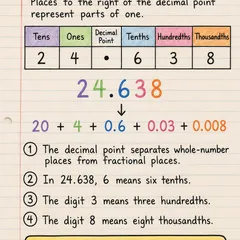
Decimal place value
Tenths, hundredths and thousandths after the point.
Years 5 – 6View & print →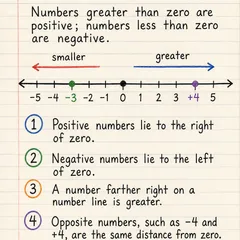
Positive and negative numbers
Numbers either side of zero, and how to order them.
Years 5 – 6View & print →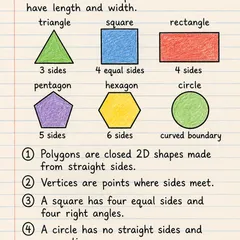
Two-dimensional shapes
Naming flat shapes by their sides and corners.
F – 2View & print →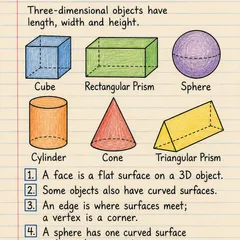
Three-dimensional objects
Faces, edges and vertices of solid shapes.
F – 2View & print →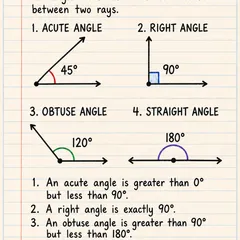
Types of angles
Acute, right, obtuse and reflex, and how to spot each.
Years 3 – 4View & print →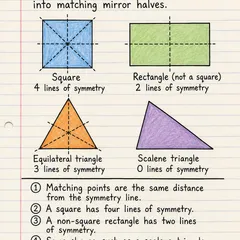
Lines of symmetry
Where a shape folds to match itself exactly.
Years 3 – 4View & print →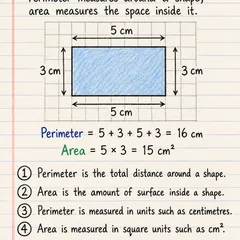
Perimeter and area
The distance around a shape, and the space inside it.
Years 3 – 4View & print →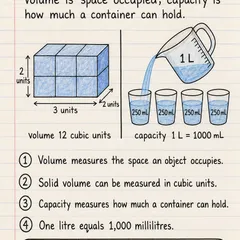
Volume and capacity
The space a solid takes up, and how much a container holds.
Years 3 – 4View & print →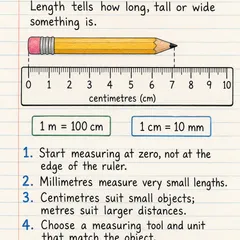
Measuring length
Choosing a unit and a tool, and reading the scale.
F – 2View & print →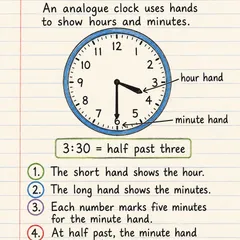
Reading an analogue clock
What the two hands tell you, to the hour and beyond.
F – 2View & print →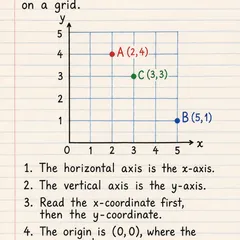
Coordinates on a grid
Finding and naming a point with a pair of numbers.
Years 5 – 6View & print →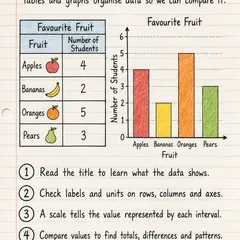
Reading tables and graphs
Pulling an answer out of a table, chart or graph.
Years 3 – 4View & print →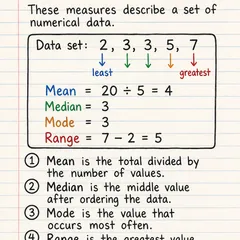
Mean, median, mode and range
Four ways to describe a set of numbers.
Years 5 – 6View & print →


English
Sounds, words, grammar, punctuation and reading comprehension.
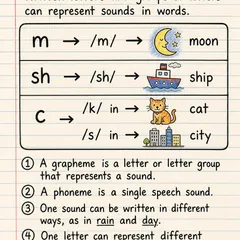
Letters and sounds
The sounds letters stand for, and how they blend.
F – 2View & print →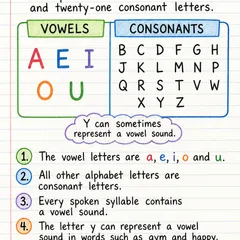
Vowels and consonants
The two kinds of letter, and why every word needs a vowel.
F – 2View & print →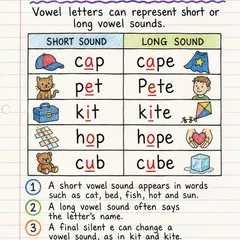
Short and long vowel sounds
When a vowel says its sound, and when it says its name.
F – 2View & print →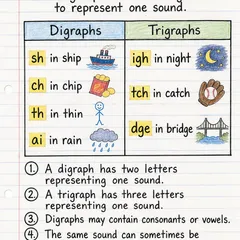
Digraphs and trigraphs
Two or three letters working together as one sound.
F – 2View & print →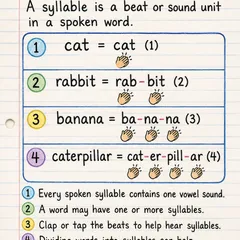
Syllables
Breaking a word into the beats you say.
F – 2View & print →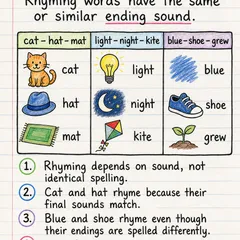
Rhyming words
Words that end with the same sound.
F – 2View & print →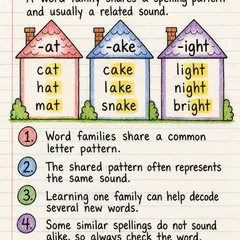
Word families
Words built on the same ending, and how they help with spelling.
F – 2View & print →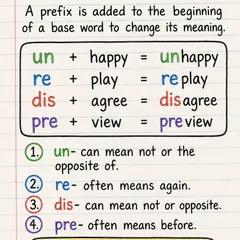
Prefixes
Beginnings added to a word, and how they change its meaning.
Years 3 – 4View & print →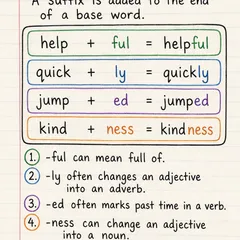
Suffixes
Endings added to a word, and how they change its meaning.
Years 3 – 4View & print →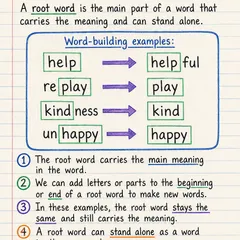
Root words
The part of a word that carries its meaning.
Years 3 – 4View & print →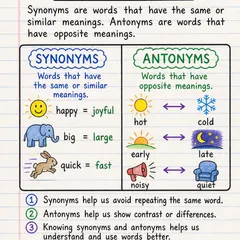
Synonyms and antonyms
Words that mean the same, and words that mean the opposite.
Years 3 – 4View & print →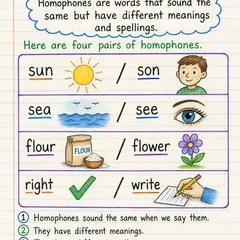
Homophones
Words that sound alike but are spelled differently.
Years 3 – 4View & print →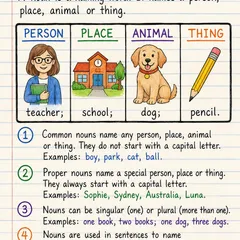
Nouns
Naming words for people, places and things.
F – 2View & print →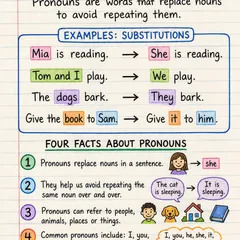
Pronouns
Short words that stand in for a noun.
F – 2View & print →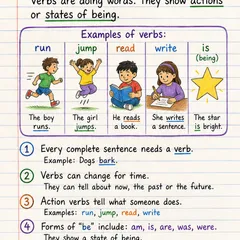
Verbs
Words for doing and being.
F – 2View & print →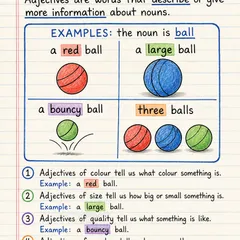
Adjectives
Words that describe a noun.
F – 2View & print →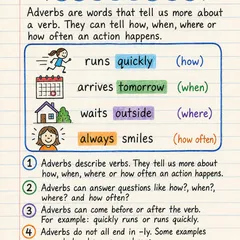
Adverbs
Words that tell you how, when or where.
Years 3 – 4View & print →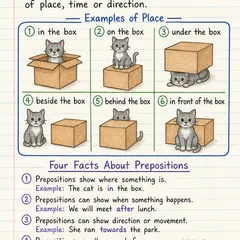
Prepositions
Words that place one thing in relation to another.
Years 3 – 4View & print →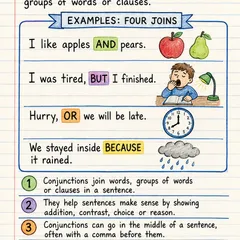
Conjunctions
Words that join ideas inside a sentence.
Years 3 – 4View & print →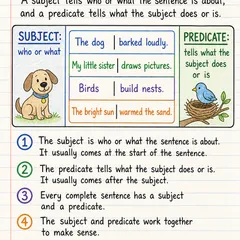
Subjects and predicates
Who the sentence is about, and what is said about them.
Years 5 – 6View & print →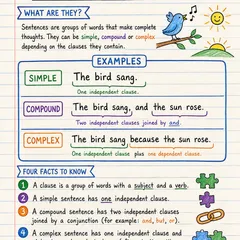
Simple, compound and complex sentences
Three sentence shapes, and how clauses join up.
Years 5 – 6View & print →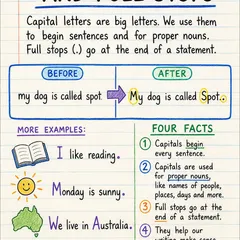
Capital letters and full stops
Where a sentence starts and where it stops.
F – 2View & print →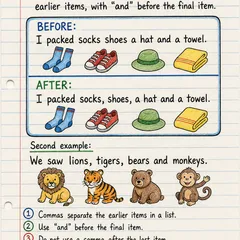
Commas in lists
Using commas to separate items in a list.
F – 2View & print →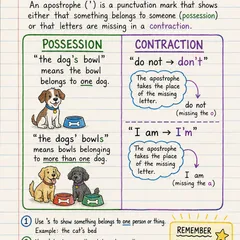
Apostrophes for possession and contraction
The two jobs an apostrophe does.
Years 3 – 4View & print →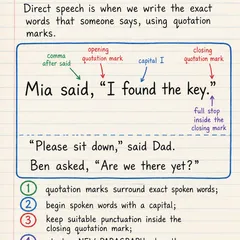
Direct speech and quotation marks
Punctuating the words someone actually says.
Years 3 – 4View & print →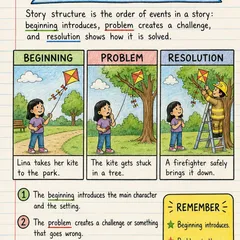
Story structure: beginning, problem and resolution
The shape most stories follow, start to finish.
F – 2View & print →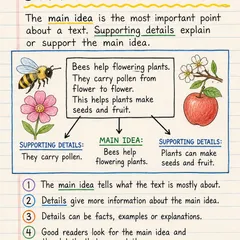
Main idea and supporting details
What a passage is mostly about, and what backs it up.
Years 3 – 4View & print →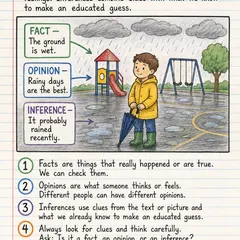
Fact, opinion and inference
What is stated, what is believed and what you can work out.
Years 5 – 6View & print →


Humanities
Places, the past, communities, government and citizenship.
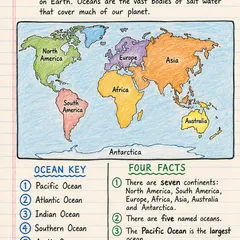
Continents and oceans
The seven continents and five oceans, and where they sit.
F – 2View & print →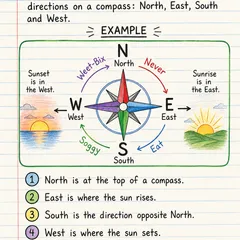
Cardinal directions
North, south, east and west, and how to use them.
F – 2View & print →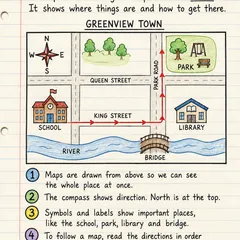
Reading a simple map
Finding your way around a map and what it shows.
F – 2View & print →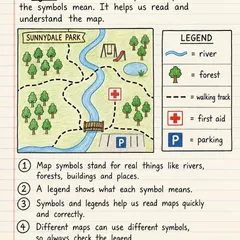
Map symbols and legends
How a legend explains the symbols on a map.
Years 3 – 4View & print →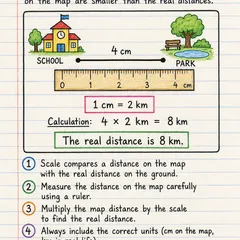
Scale on a map
How distance on a map relates to distance on the ground.
Years 5 – 6View & print →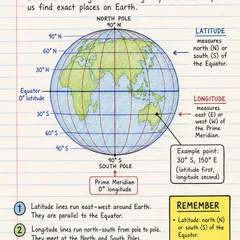
Latitude and longitude
The grid that gives every place on Earth an address.
Years 5 – 6View & print →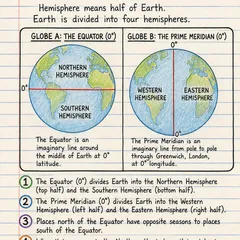
The Equator and hemispheres
The lines that split the Earth into halves.
Years 3 – 4View & print →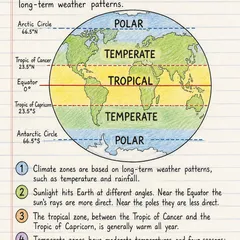
Climate zones
The broad bands of climate, and what lives in them.
Years 5 – 6View & print →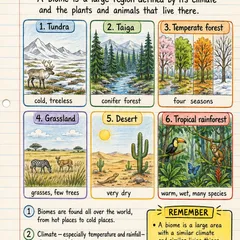
Biomes of the world
Major habitats, their plants and their animals.
Years 5 – 6View & print →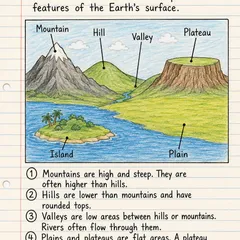
Landforms
Hills, valleys, plains, cliffs and the words for them.
F – 2View & print →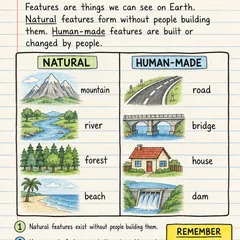
Natural and human-made features
Telling apart what was there and what we built.
F – 2View & print →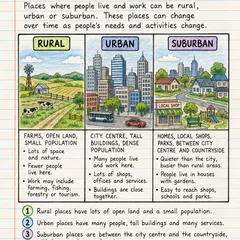
Rural, urban and suburban places
Three kinds of place, and what daily life is like in each.
Years 3 – 4View & print →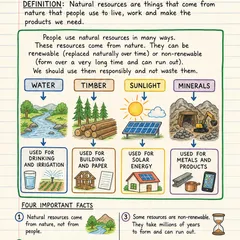
How people use natural resources
Where everyday things come from, and what it costs.
Years 3 – 4View & print →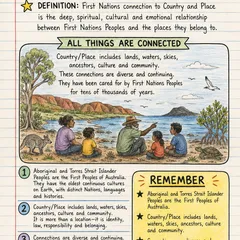
First Nations connection to Country and Place
Caring for Country, and what Place means.
Years 3 – 4View & print →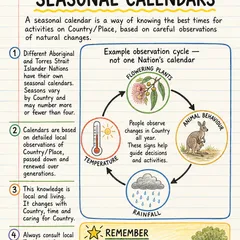
Aboriginal and Torres Strait Islander seasonal calendars
Seasons read from the land, not from a fixed calendar.
Years 5 – 6View & print →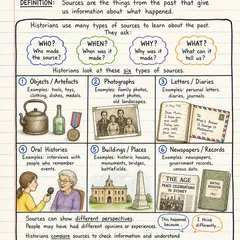
Sources: how we learn about the past
The traces the past leaves, and how we read them.
Years 3 – 4View & print →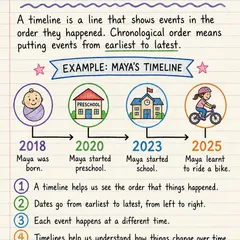
Timelines and chronological order
Putting events in order and seeing the gaps between them.
F – 2View & print →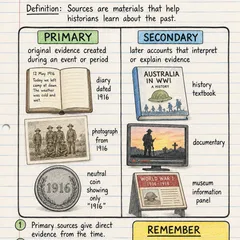
Primary and secondary sources
Evidence from the time, and accounts written later.
Years 5 – 6View & print →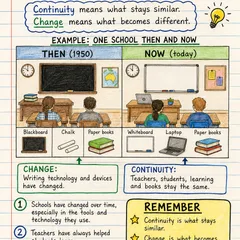
Continuity and change
What has stayed the same, and what has not.
Years 3 – 4View & print →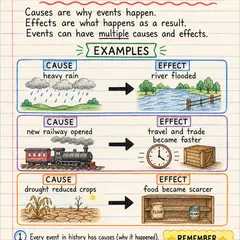
Cause and effect in history
Why something happened, and what followed from it.
Years 5 – 6View & print →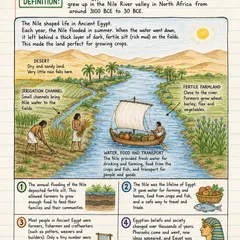
Ancient Egypt: the Nile and daily life
How the river shaped farming, building and daily life.
Years 3 – 4View & print →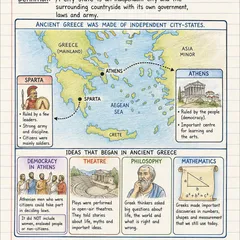
Ancient Greece: city-states and ideas
City-states, and the ideas they left behind.
Years 5 – 6View & print →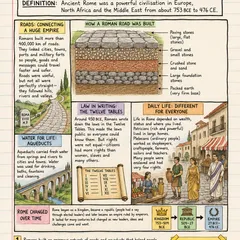
Ancient Rome: roads, law and daily life
Roads, law and everyday life across the empire.
Years 5 – 6View & print →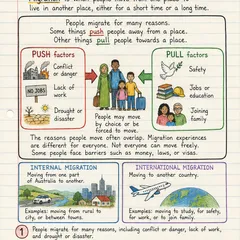
Migration: why people move
The reasons people leave a place, and what they find.
Years 5 – 6View & print →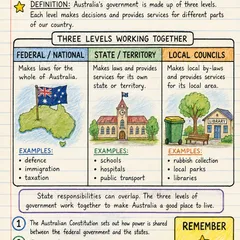
Levels of government in Australia
Local, state and federal, and who decides what.
Years 5 – 6View & print →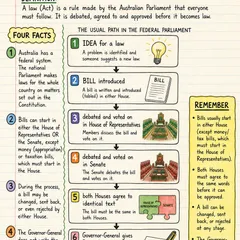
How laws are made in Australia
A bill on its way to becoming law.
Years 5 – 6View & print →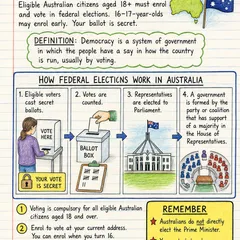
Voting and democracy
How a vote works, and why everyone gets one.
Years 5 – 6View & print →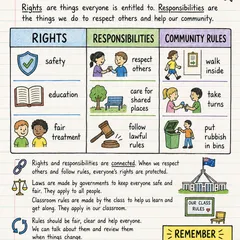
Rights, responsibilities and community rules
What you are owed, and what you owe others.
Years 3 – 4View & print →


Technology & arts
Computing, design, structures, visual art, music and drama.
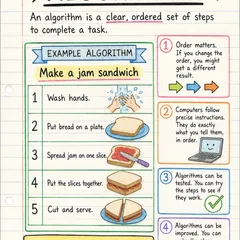
What is an algorithm?
A set of steps, in order, that gets a job done.
F – 2View & print →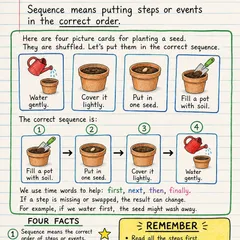
Sequencing instructions
Why the order of steps changes the result.
F – 2View & print →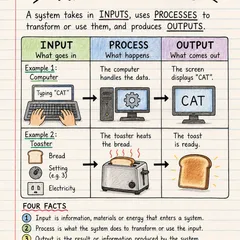
Inputs, processes and outputs
What goes in, what happens to it and what comes out.
Years 3 – 4View & print →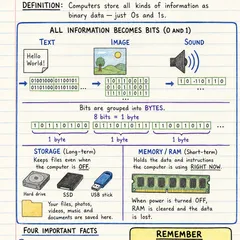
How computers store information
How text, pictures and sound are kept as data.
Years 5 – 6View & print →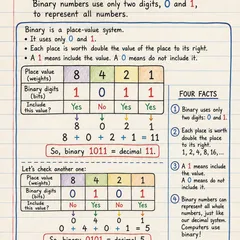
Binary numbers: a simple introduction
Counting with only ones and zeros.
Years 5 – 6View & print →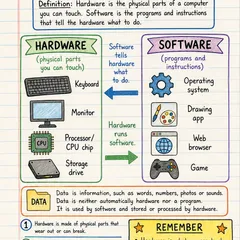
Computer hardware and software
The parts you can touch, and the programs you cannot.
Years 3 – 4View & print →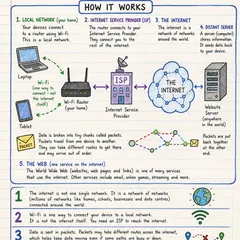
Networks and the internet
How computers connect and pass messages along.
Years 5 – 6View & print →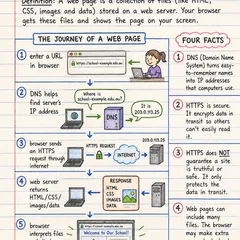
How a web page reaches your screen
The journey from a typed address to a page.
Years 5 – 6View & print →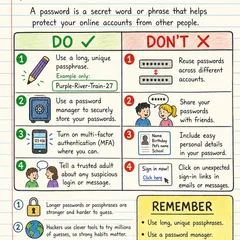
Passwords and account safety
What makes a password strong, and how to keep it safe.
Years 3 – 4View & print →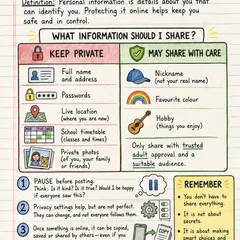
Personal information and online privacy
What to share, what to keep private and who to ask.
Years 3 – 4View & print →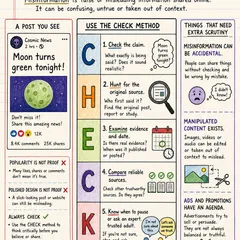
Recognising misleading information online
Questions to ask before believing what you read.
Years 5 – 6View & print →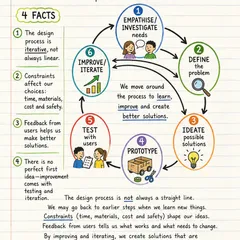
The design process
From a problem to a tested design, step by step.
Years 3 – 4View & print →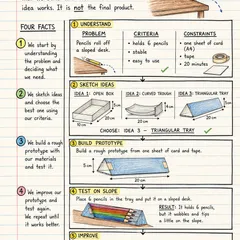
From problem to prototype
Sketching, building and improving a first model.
Years 5 – 6View & print →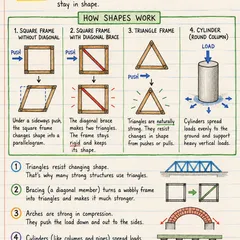
Strong shapes in structures
Why triangles hold up, and where builders use them.
Years 3 – 4View & print →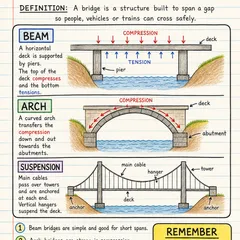
Bridges: beam, arch and suspension
Three ways to cross a gap, and how each carries weight.
Years 3 – 4View & print →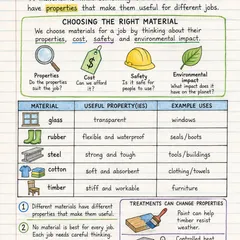
Materials and their useful properties
Choosing a material for the job it has to do.
Years 3 – 4View & print →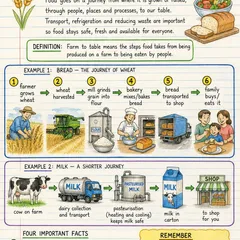
Farm to table: where food comes from
The steps food takes between the paddock and the plate.
F – 2View & print →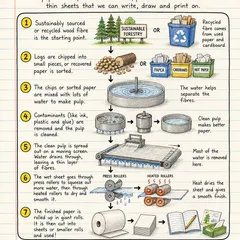
How paper is made
From timber to pulp to a finished sheet.
Years 3 – 4View & print →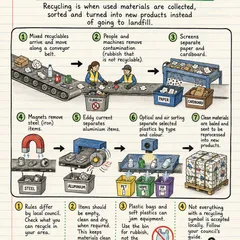
How recycling sorts materials
What happens to a bin once it is collected.
Years 3 – 4View & print →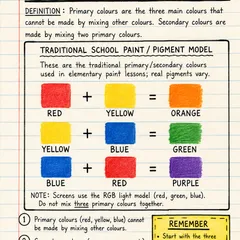
Primary and secondary colours
The three you start with, and the three you mix.
F – 2View & print →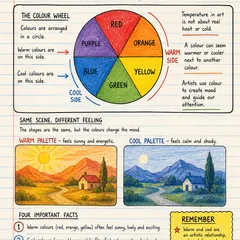
Warm and cool colours
Two halves of the colour wheel, and the mood of each.
F – 2View & print →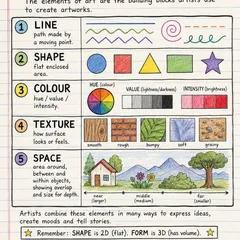
Elements of art: line, shape, colour, texture and space
Five building blocks artists work with.
Years 3 – 4View & print →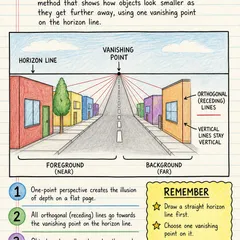
One-point perspective
Drawing depth with a horizon and a vanishing point.
Years 5 – 6View & print →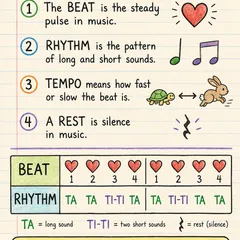
Beat and rhythm
The steady pulse, and the pattern played over it.
F – 2View & print →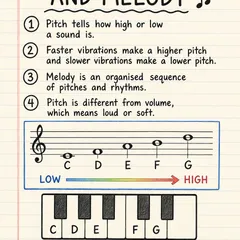
Musical pitch and melody
High and low notes, and the tunes they make.
Years 3 – 4View & print →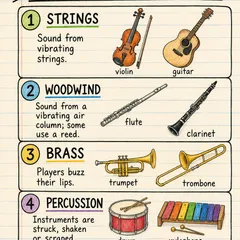
Families of musical instruments
Grouping instruments by how they make their sound.
F – 2View & print →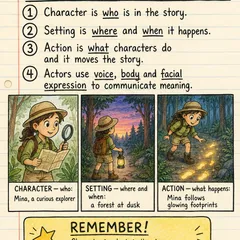
Drama: character, setting and action
The three things every scene needs.
Years 3 – 4View & print →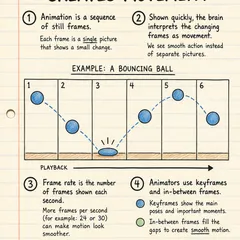
How animation creates movement
Still pictures shown fast enough to look alive.
Years 5 – 6View & print →


